
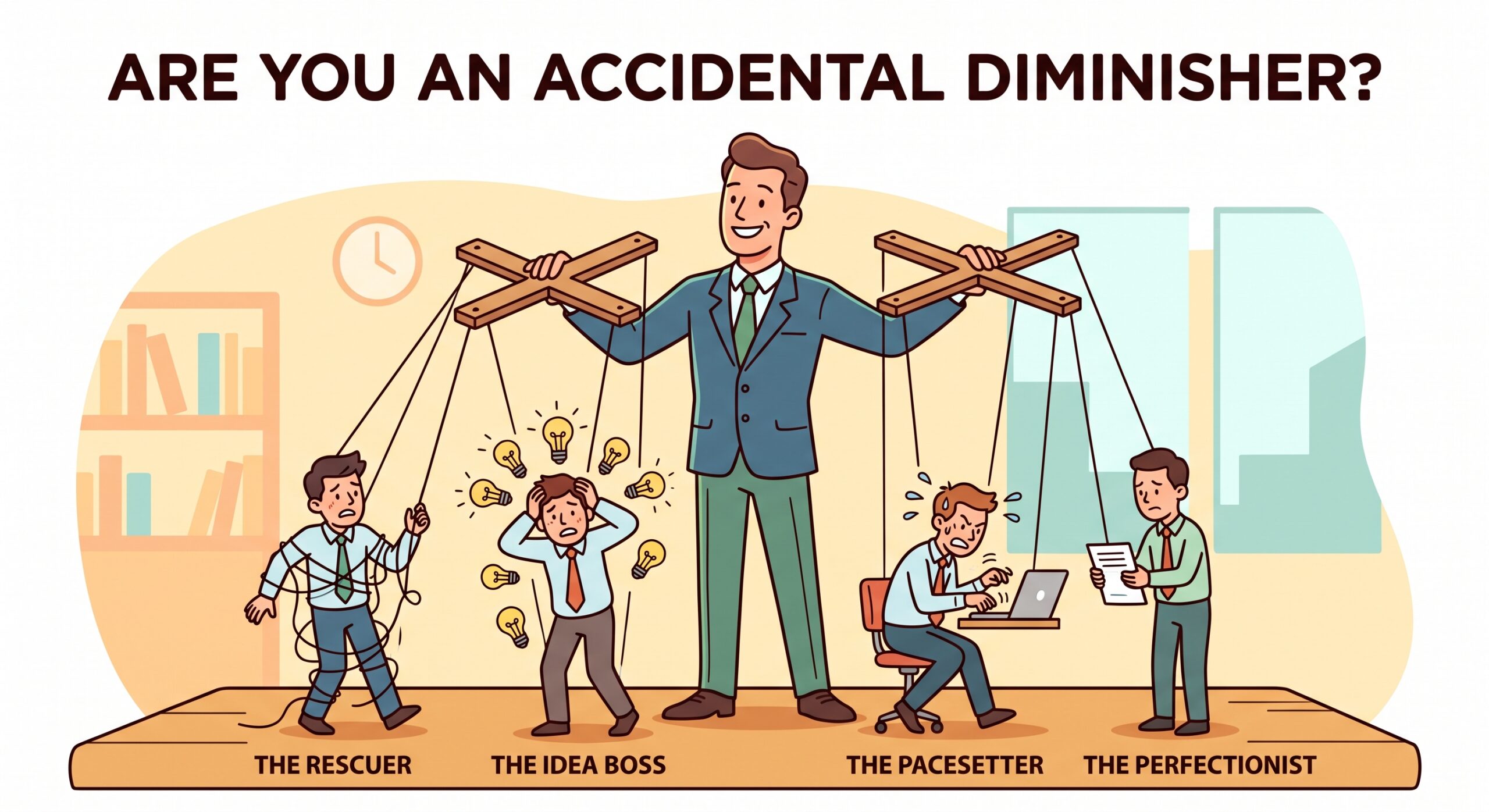
Are You Making Your Staff Worse?
When a member of staff is not performing, it is incredibly easy to assume that they are the problem.
Maybe their attitude is not right, maybe they are not motivated enough, maybe they are not taking enough responsibility, or perhaps they simply are not as capable as you thought they were when you employed them.
And sometimes that is absolutely true.
However, one thing I have learned from managing people over the years is that whenever I have a problem with somebody in my team, I try to look at myself first and ask whether I am actually managing them in the right way.
Have I made my expectations clear enough? Am I giving them enough responsibility? Have I created the right environment for them to perform? Am I allowing them to think for themselves, or am I constantly stepping in and doing too much of the thinking for them?
Or, without even realising it, am I actually making them worse?
One of the best leadership books I have read is Multipliers by Liz Wiseman. She talks about Multipliers, who bring out more intelligence, capability and confidence in the people around them, and Diminishers, who have the opposite effect.
What really interested me was her description of the Accidental Diminisher, because these are not necessarily terrible bosses. In fact, quite often they are good leaders with good intentions who genuinely believe they are helping their team.
The problem is that the way they lead can unintentionally make people less confident, less independent and less likely to think for themselves.
When I first came across these leadership styles, I could recognise myself in several of them, and if I am completely honest, I still can.
That is why I think they are so useful.
Before deciding that somebody in your team is the problem, it is worth asking whether your own leadership style could be contributing to it.
So, which boss are you?
The Idea Boss
The Idea Boss constantly sees opportunities and cannot resist sharing them, whether that is another marketing idea, another service you could launch, another system you could improve, or another way you could change the business.
I definitely recognise this one in myself because when you are naturally quite entrepreneurial, having ideas feels productive. You think you are creating energy, helping people think bigger and showing the team what is possible.
The problem is that your team can experience it very differently.
Every conversation with you can suddenly create another possible project, and people can struggle to understand which ideas are simply you thinking out loud and which ones you genuinely expect them to implement.
Over time, there is an even bigger problem because your team can gradually stop generating ideas themselves. If there is already an endless supply coming from you, it becomes much easier for everybody else to simply wait for your next one.
Instead of developing people who think, you can accidentally create people who wait.
Sometimes the best thing you can do as a leader is have an idea and keep it to yourself long enough to see whether somebody else comes up with one first.
The Always On Boss
The Always On Boss brings huge amounts of energy into the business and will normally be the person talking, contributing, motivating, explaining and constantly sharing their thoughts.
They can leave a meeting thinking it went brilliantly because there was loads of energy in the room, when in reality most of that energy came from them.
I think naturally dominant personalities need to be particularly careful with this one because if you are always contributing, everybody else gets less opportunity to contribute themselves.
Over time, people can stop challenging you, stop sharing their ideas and simply wait for you to speak because they already know you will probably have an opinion.
You can easily mistake silence for agreement when actually you have just become the loudest person in the room.
Great leadership is not always about proving how much you know or bringing energy to every conversation. Sometimes it is about asking a good question, allowing the silence to sit there for a moment and giving somebody else the space to find the answer.
The Rescuer Boss
The Rescuer Boss hates watching somebody struggle, so when a member of staff has a problem, their instinct is to step in quickly, remove the obstacle and help them solve it.
Again, the intention is usually completely positive because you care about your team and you do not want people feeling stressed, overwhelmed or unsupported.
The problem is that struggling is often where development actually happens.
If every time somebody hits an obstacle you immediately jump in and fix it for them, they never get the opportunity to develop the confidence or problem solving ability to work through those situations themselves.
Over time, you can accidentally train people to bring every problem back to you, and then become frustrated that they are not independent enough.
That is the irony of the Rescuer Boss. You step in because you want to help somebody become more successful, but the more often you rescue them, the less capable they can start to feel without you.
Sometimes helping somebody does not mean giving them the answer. It means asking them what they think should happen next and allowing them to work through it.
The Pacesetter Boss
The Pacesetter Boss leads from the front, works incredibly hard and usually sets a very high standard for everybody around them.
This can be a huge strength when you are building a business because your own standards often become the standards of the organisation, particularly in the early days.
The danger comes when everybody around you starts to feel like they are permanently trying to catch you.
You might think you are inspiring people by showing them what high performance looks like, but the experience for the team can be very different if they constantly feel that whatever they do is still slower or not quite as good as the way you would have done it.
Eventually, people can become dependent on your pace rather than developing confidence in their own way of working.
Then, as the owner, you become frustrated because nobody appears to move as quickly as you do, without recognising that you may have created a culture where everybody is comparing themselves with you rather than developing their own strengths.
Leadership is not about creating ten smaller versions of yourself. It is about getting the best possible performance from different people with different strengths.
The Rapid Responder Boss
The Rapid Responder Boss always has the answer and normally has it very quickly.
A question lands in the WhatsApp group and they reply immediately. A problem appears in the clinic and they solve it before anybody else really gets involved. Something goes wrong and they are instantly there with the solution.
It feels productive because problems disappear quickly, but every time you answer first, everybody else has slightly less reason to think.
Over time, you can gradually become the person that the entire organisation relies upon for answers, and then find yourself complaining that everything seems to come through you.
I think this is one of the easiest traps for business owners to fall into because you often do know the answer and it normally is quicker to simply give it.
The problem is that what is quickest today is not always what is best for the business long term.
If you want people to take more responsibility, you have to give them the space to take responsibility, even when you already know exactly what you would do.
The Optimist Boss
The Optimist Boss genuinely believes that everything will work out and, in many ways, that is a fantastic quality for a leader to have.
Teams need people who believe problems can be solved, who can see a way forward and who do not panic every time something becomes difficult.
The danger is when that optimism causes you to underestimate how difficult something actually feels for the person doing it.
You might say something like, “It is easy, just get it done,” because from your perspective it genuinely does feel easy, particularly if you have done it hundreds of times before.
The member of staff may be dealing with the same situation for the first time.
If you constantly make difficult things sound simple, people can eventually stop telling you when they are struggling because they do not want to appear incapable.
Good leadership means staying optimistic while still acknowledging that something may be difficult. You can believe somebody will succeed while also recognising that they may need some support getting there.
The Protector Boss
The Protector Boss wants to shield their team from problems and will often step in to protect people from difficult conversations, angry patients, challenging decisions or pressure elsewhere in the business.
You can convince yourself that you are creating a great working environment because people are being protected from unnecessary stress.
The problem is that if you protect people from everything difficult, they never develop the ability to deal with difficult situations themselves.
Then, when something uncomfortable eventually does happen, they immediately need you because they have never really had the opportunity to build confidence dealing with it.
There is a huge difference between supporting somebody through a difficult situation and removing every difficult situation before it reaches them.
If you genuinely want people to grow, there has to be a point where they are given responsibility and allowed to experience some of the discomfort that comes with it.
The Strategist Boss
The Strategist Boss can see where everything is going and usually has a very clear picture of what the business should do next.
They see opportunities early, they understand the bigger picture and they are often thinking several steps ahead of everybody else.
That is obviously a huge strength as the owner of a business, but it can also make everybody else lazy thinkers if you are not careful.
If you constantly explain where the business needs to go, what needs to happen next and exactly how you think everything should be done, your team never really gets the opportunity to develop that strategic thinking themselves.
They become very good at executing your plan but not necessarily at creating one.
Then you can end up wondering why nobody in the business thinks strategically, even though you have spent years doing all of the strategic thinking for them.
Sometimes you have to resist showing people the entire path and instead ask them where they think the business should go next.
The Perfectionist Boss
The Perfectionist Boss wants everything done properly, and standards, details and quality matter enormously to them.
This can be an incredible strength in any business where the experience of the customer really matters, because those leaders often notice things everybody else misses.
The problem comes when your pursuit of quality starts reducing everybody else’s ownership.
If somebody produces something that is 90 percent right and you immediately focus on the final 10 percent, change it yourself and show them how you would have done it, eventually they can stop feeling that the work is really theirs.
They already know you are going to change it.
Over time, people can also become nervous about making decisions because they are frightened of getting something wrong or failing to meet your exact standard.
The irony is that your pursuit of quality can eventually create a less capable team because people stop taking ownership and start waiting for your approval.
There are times when something being 90 percent right and completely owned by somebody else is more valuable than it being 100 percent right because you took it back and finished it yourself.
Check Yourself First
None of these leadership styles automatically make somebody a bad boss. In fact, most of them start with qualities that are incredibly valuable.
Ideas, energy, high standards, optimism, speed, support and strategic thinking can all help build an exceptional business.
The problem comes when we use those strengths so much that they start reducing the capability of everybody around us.
That is the bit I have found most useful.
Whenever somebody in my team is struggling, I still believe they have to take responsibility for their own performance, but before I decide they are the problem, I try to look at myself first.
Have I given them enough ownership? Have I allowed them to think? Have I allowed them to struggle occasionally and solve problems without me? Have I made my expectations clear without telling them exactly how every single thing should be done?
Because sometimes the member of staff is the problem.
But sometimes the more uncomfortable answer is that the boss has accidentally helped create the problem.
And being willing to recognise that is one of the most important parts of becoming a better leader.
Joe