
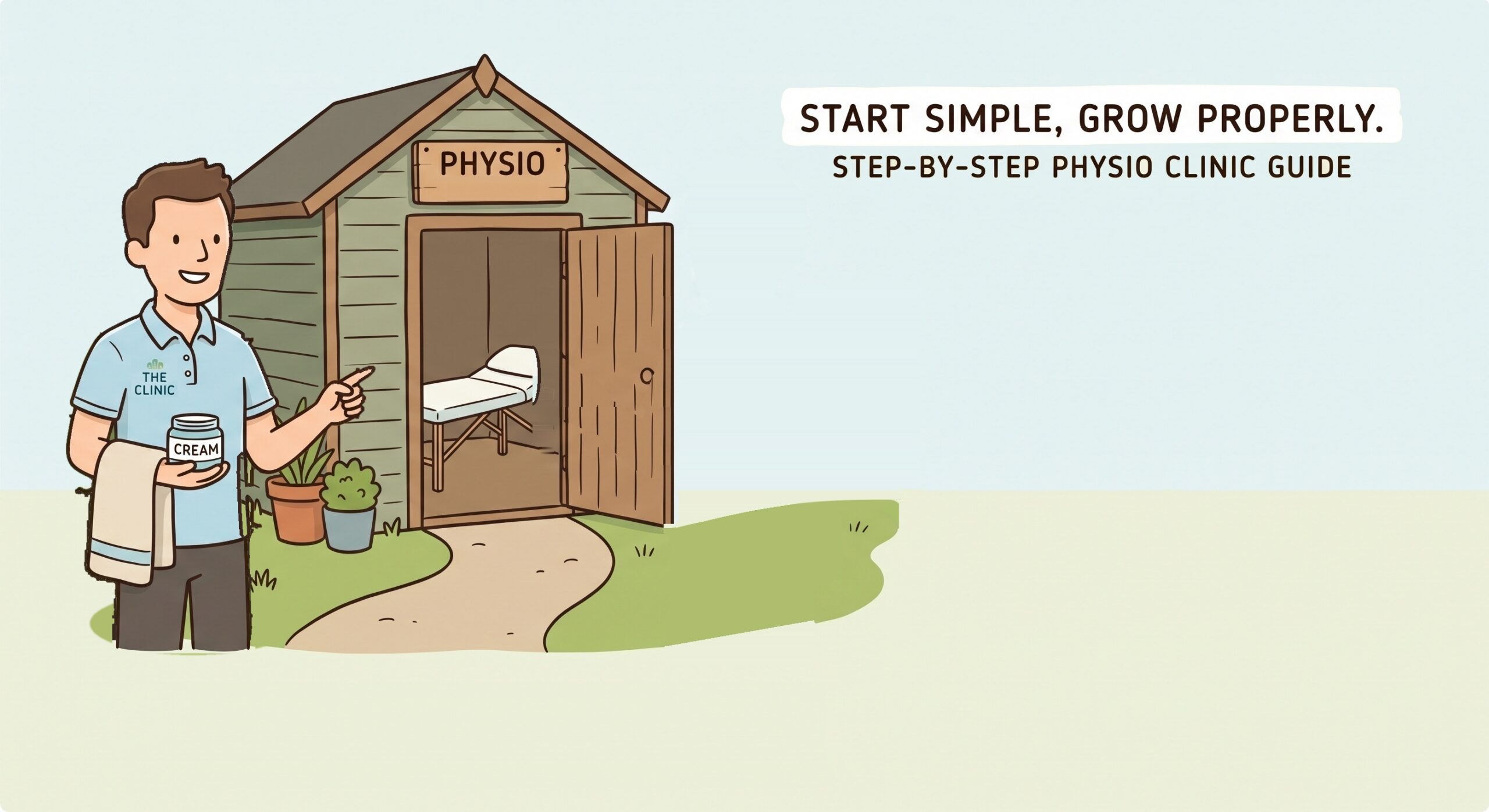
Simple does not mean there is no strategy
There are a lot of decisions to make when you start a clinic, and some of the choices you make early on can have a surprisingly big impact on what the business looks like several years later.
That is why I think there is a real science behind doing this properly. Not because it needs to be complicated, but because there are things you should do immediately, things that should happen later and things you probably do not need at all.
When people get that badly wrong, I tend to see one of two outcomes.
Sometimes the clinic fails completely. Money gets spent in the wrong places, the patients do not arrive quickly enough, confidence disappears and eventually they make a very definite decision that owning a clinic is not for them. They close it, go back into employment and that book never gets opened again.
The other outcome can be harder to recognise because technically the clinic succeeds. It replaces their salary and may even pay slightly more, but they are working every hour God sends them, they never properly switch off and there is never enough money or time left over to build anything beyond themselves.
Every cancellation comes back to them, every new enquiry needs them, every booking problem lands on their phone, and every time they take time off the business effectively follows them. Five or ten years later, they can find themselves wondering whether they would actually have been better off staying employed.
Very often that traces back to decisions made right at the start.
Pricing is one obvious example. If you start far too cheap just to get people through the door, you can build an entire business around numbers that never give you enough margin to invest, recruit or create space for yourself later.
That is why the aim is not simply to open a clinic. It is to start it properly.
Get clear on who you are for
One of the most important things to work out early is who you actually want to help, because almost everything else comes from that decision.
Your website, your content, your partnerships, your messaging and the way you talk about the clinic all become much easier once you know who you are trying to attract.
If you are vague about who you are for, all of those things become vague as well, and the person finding you online is left trying to work out whether your clinic is really for someone like them.
You do not need to narrow yourself down to one condition for the rest of your career, but you do need enough clarity that the right person can find you and immediately think, this is for me.
That means understanding the type of people you want to work with, the problems they are likely to have, the things they want to get back to and the things they are most worried about losing.
Once you understand that, your marketing becomes much easier because you are no longer trying to say something that appeals to everyone.
Start publishing before you feel ready
Once you know who you are for, the next step is to start putting useful information in front of them.
You do not need perfect lighting, expensive cameras or a massive following before you start. What you really need is a clear understanding of the questions your potential patients are already asking, then you can start answering those questions consistently.
If you want to work with runners, talk about the injuries and frustrations that stop runners training. If you want to work with active people over 50, talk about the things that threaten their independence, confidence and ability to keep doing what they enjoy. If you want to work with shoulder patients, answer the questions people with shoulder pain are typing into Google every day.
The aim is not to become an influencer. The aim is to become useful enough that people start to recognise your name, trust what you say and remember you when they eventually need help.
That trust is built long before somebody walks through your door, and the clinics that understand that tend to find marketing far easier than the ones that only start talking to people once they are ready to book
There is an order to all of this
Probably the biggest thing I want you to take away is that starting a clinic is not about doing everything at once.
It is about understanding what needs to happen first, what can happen alongside it, what needs to wait and what you may never need at all.
There are things you can do today that cost you nothing, and there are things that only make sense once you have some patients and some revenue coming into the business. If you treat every possible task as urgent, you will either overwhelm yourself or start spending money in places that are not yet solving a real problem.
This is where a lot of people get into trouble. They try to build the finished version of the clinic before they have proved the basic model.
They commit to premises too early, spend money on equipment too early, leave employment too early or focus so much on looking established that they forget to prove whether they can generate demand consistently.
A much better approach is to let each stage earn the next one.
Start small, prove demand, build confidence, generate revenue and then reinvest when the next investment actually makes sense.
That way, the business grows because there is a reason for it to grow, rather than because you are trying to force it to look bigger than it really is.
Decide what you actually want
It is also worth asking yourself what you are actually trying to build, because there is no point creating a clinic that looks successful from the outside if it does not give you the life you wanted in the first place.
For some people, the perfect clinic might be something they work in three days a week that gives them a very good income and a brilliant work life balance. For someone else, the goal might be to build a team, open multiple locations and eventually create something that is much bigger than their own diary.
Neither one is better than the other.
The important thing is that you are honest about what you want, because once you know that, the decisions you make around pricing, capacity, hours, premises and growth all start to make much more sense.
If you never decide what success looks like, it is very easy to drift into a business model that keeps you busy but never really gets you where you wanted to go.
Start simple, but start properly
You do not need to have everything figured out before you begin, and you definitely do not need the perfect clinic from day one.
You do not need all the equipment, you do not need to leave your job tomorrow and you do not need to spend a fortune making yourself look established.
What you do need is a clear understanding of the order, because that is what separates starting simply from starting randomly.
Get the foundations right, build demand before overhead, know who you are for, start publishing useful information and make decisions based on where you want the business to go rather than what feels easiest in the moment.
That is how you give yourself the best chance of building something that does not just replace your salary, but actually gives you more options over time.