
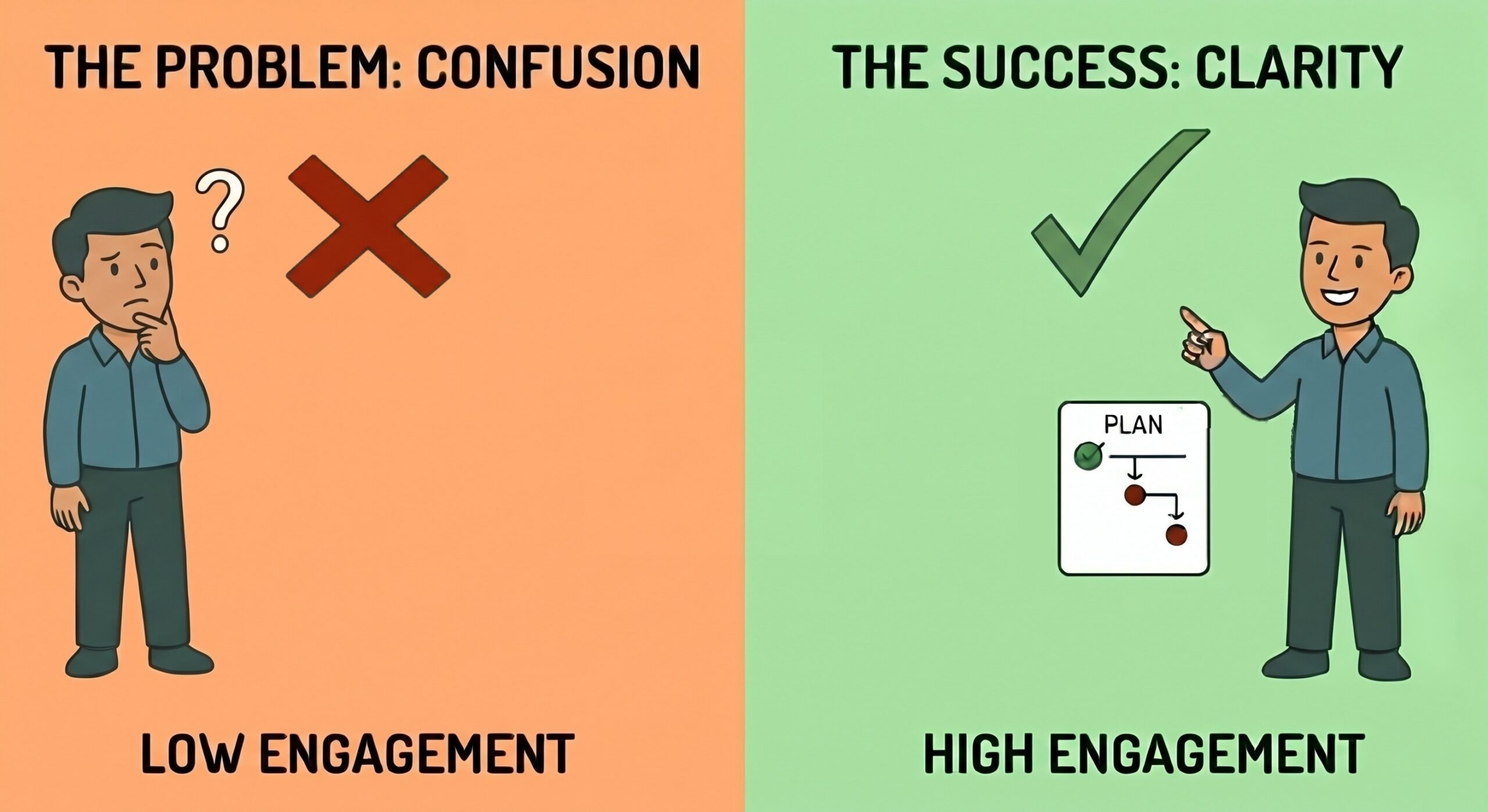
Low Average Patient Visit? Now What?
A lot of private clinics are operating with very little visibility over how the clinic or individual members of staff are actually performing.
Even when they do have the numbers in front of them, there is another problem.
They often do not know what to do with them.
Low average patient visit and high cancellation rates are absolute killers in a private clinic, and not just from a revenue perspective.
They also affect patient outcomes.
If patients are cancelling, disengaging early or disappearing before they complete the agreed plan, they are far less likely to get the result they originally came in for.
The commercial problem and the patient outcome problem go hand in hand.
The real question is not simply whether you have the data.
The real question is what you do with it.
Do Not Automatically Blame Clinical Skill
One of the biggest mistakes clinic owners make is assuming that poor patient retention means the physio needs more clinical training.
Average patient visit is low, cancellations are high, so the immediate reaction is another clinical course, another qualification or another weekend of CPD.
Most of the time, that is not the answer.
You can have a clinically excellent physiotherapist who still struggles to take a patient through a complete plan of care.
The issue is usually communication.
More specifically, it is how they open the consultation, how they close it, how they follow up, and most importantly, how they take their findings from session one and turn them into a clear management plan.
A physio can complete a brilliant assessment and reach the correct diagnosis, but if they cannot explain that diagnosis properly, translate it into language the patient understands and then present a plan the patient believes in, engagement will suffer.
That is why more clinical training often solves nothing.
Session One Is Where The Problem Usually Starts
A huge amount of patient engagement is decided in the first appointment.
The physio has to take everything they have learned during the assessment and translate it into something the patient can understand.
They need to explain what they think is happening, what needs to happen next, how long the process is likely to take and exactly what they want the patient to do.
The patient should not just understand the plan.
They should buy into it.
They should leave the first appointment knowing what the problem is, knowing what the next step is and feeling confident that they are on the right path.
They should be looking forward to the next appointment because they understand why it matters.
When that part is weak, disengagement starts.
Patients book inconsistently, cancel more often, delay follow ups and drop off early.
You Have The Data. Now What?
This is where a lot of clinic owners get stuck.
You might know that one physio has an average patient visit of three when you want it closer to six.
You might know another member of staff is running at a 25 percent cancellation rate when you want it closer to 5 percent.
Knowing that matters, but the number itself does not tell you what to coach.
How do you actually move average patient visit from three to six?
How do you move cancellations from 25 percent to 5 percent?
Anything you expect, you must inspect.
You have to look at what the physio is actually doing inside the consultation.
For years, this is exactly how we have approached it in my clinics.
We would observe consultations and score them against a communication scorecard.
Over time, we became very good at predicting which patients were at risk of disengaging simply from the score.
What we repeatedly found was that lower communication scores matched lower average patient visit and higher cancellation rates.
The opposite was also true.
When we improved those communication scores, average patient visit increased and cancellation rates came down.
That pattern was consistent enough that we stopped treating these numbers as isolated performance metrics and started looking at the communication behaviours underneath them.
The Problem With Manual Coaching
The process worked, but it was time consuming.
Somebody had to observe the consultation, complete the scorecard, identify the weakest areas and then turn that into coaching for the individual physio.
That is difficult to do consistently once the clinic starts growing.
It is also very easy to give the wrong training.
There is no point spending a coaching session teaching somebody how to assess a knee if the real problem is that they cannot clearly explain the management plan to the patient.
There is no point spending hours on clinical reasoning if the patient already understands the diagnosis but has no idea what they are meant to do next.
You have to identify the one thing creating the biggest constraint and coach that.
That is where NoteSense Coach becomes so valuable.
Turning Every Consultation Into Coaching Data
NoteSense Coach takes the communication scorecard we have used in our clinics for years and applies that same thinking after the consultation.
It gives the practitioner insight into the parts of the consultation that need improving, without the clinical lead having to physically sit in the room and observe every session.
A physio might be giving the correct diagnosis but explaining it in language the patient does not understand.
They might give the medical explanation but fail to translate it into something meaningful and relevant to the patient.
The overall plan might not be clear enough.
They might explain what is wrong but fail to make it obvious what they want the patient to do next.
The patient might leave without understanding how the next few appointments fit into the bigger picture.
These are not small details.
These are the things that directly affect whether a patient stays engaged with the plan.
NoteSense Coach creates that insight for the individual practitioner straight away.
Coaching Becomes Specific
This is where it becomes particularly useful for clinic owners and clinical leads.
Instead of going into a training session with a vague idea that somebody needs help with communication, you can see exactly where the biggest opportunity sits.
If they are excellent at assessing a knee but consistently score lower when presenting the management plan, that is where the training should go.
If they explain the plan well but struggle to make the diagnosis understandable, you coach that instead.
If the opening of the follow up is weak, you work on that.
The training becomes specific to the individual.
That matters because generic training does not create the same improvement.
The fastest change comes from identifying the biggest weakness, coaching it directly and then inspecting it again.
You Can See Whether They Are Improving
The other important part is that this is not based on one consultation.
The scores can be tracked over time.
As the physio practises, implements the coaching and improves, they can see those scores move.
The clinical lead can see it too.
That means you are no longer telling somebody to simply communicate better.
You can identify the exact skill, coach it, inspect it again and see whether it has changed.
That gives you a proper feedback loop.
It also makes your one to one training much more useful because you are working on the thing that will actually make the biggest difference.
Do Not Just Measure The Number
Average patient visit and cancellation rate are incredibly important numbers, but the number is only the starting point.
If average patient visit is too low, the answer is not just telling the team it needs to increase.
If cancellations are too high, the answer is not just reminding everybody that cancellations are bad.
You need to understand why.
Then you need to identify the behaviour underneath the number.
Then you need to coach that behaviour.
That is what NoteSense Coach is designed to help you do.
It gives the individual practitioner much clearer insight into their own consultations and gives the clinic owner or clinical lead a much clearer picture of exactly where the training needs to go.
Once you can see what is actually happening inside the consultation, you can stop guessing.
You can identify the weakness, coach it and then measure whether it improves.
That is how you move average patient visit.
That is how you reduce cancellations.
And that is how you improve both clinic performance and patient outcomes.
Joe